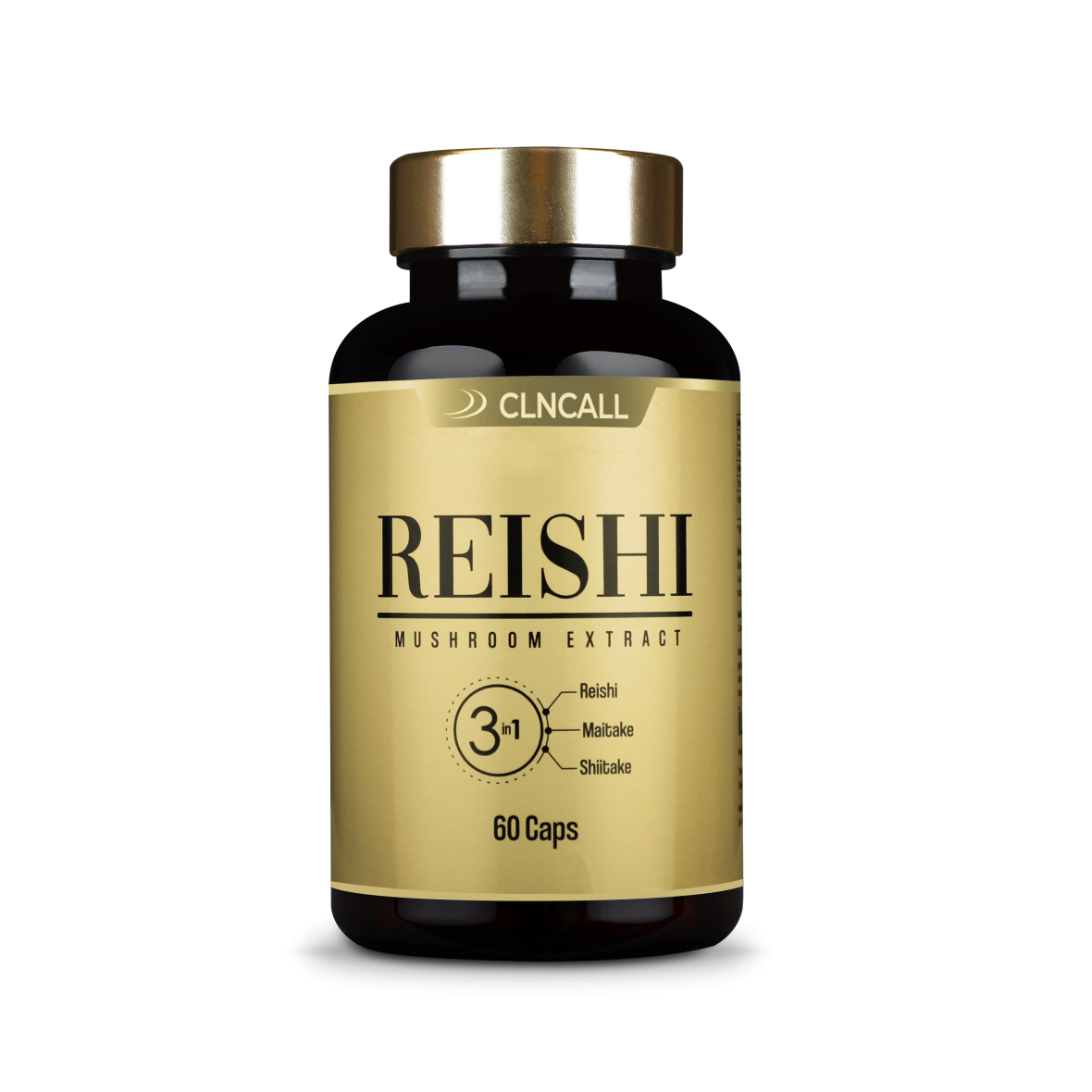
Contents: Reishi mushroom Extract, Shiitake mushroom Extract, Maytake mushroom Extract, Hydroxypropylmethyl Cellulose, L-askorbic acid, Salts of fatty acids, Astaxanthin, Maltodextrin.
| Reishi Mushroom 3in1 60 Caps | Amount/3Caps |
| Reishi Mushroom | 900 mg |
| Maitake Mushroom | 600 mg |
| Shitake Mushroom | 600 mg |
| Sodium L-ascorbate | 225 mg |
| Astaxanthin | 15 mg |
Usage Information: It is recommended to consume 2 capsules a day for adults.

| Product name | Reishi mushroom Extract | |
| Botanical name | Ganoderma lucidum | |
| Part of Plant Used | Fruit | |
| Specifications | Analytical method | |
| Polysaccharides 40% | UV | |
| Triterpenes 20% | HPLC | |
| beta D-1,3/1,6 Glucan 90% | UV | |
Polyphenols and Reishi Mushroom
Polyphenols are naturally occurring bioactive compounds composed of multiple phenolic units and are widely distributed throughout nature. They are naturally present in fruits, vegetables, tea, cocoa products and various mushroom species. Due to their structural diversity, polyphenols have become an important subject of scientific research.
Reishi mushroom (Ganoderma lucidum) contains various bioactive compounds, including polysaccharides, triterpenes and polyphenols. Scientific studies have investigated the antioxidant properties and biological characteristics of polyphenols found in Reishi mushroom.
Research on polyphenols focuses on their relationship with oxidative stress, cellular protection mechanisms, metabolic pathways and various physiological functions. These compounds are among the most extensively studied naturally occurring substances in scientific literature.
Shiitake Mushroom
Shiitake mushroom (Lentinula edodes) is an edible mushroom naturally containing copper, selenium and various bioactive compounds. Copper contributes to the maintenance of normal connective tissues and normal energy-yielding metabolism.
Scientific studies on Shiitake mushroom have investigated the relationship between its natural constituents and physiological processes. Due to its content of polysaccharides, amino acids and other naturally occurring compounds, Shiitake mushroom continues to be the subject of scientific research.
Maitake Mushroom
Maitake mushroom (Grifola frondosa) contains various polysaccharide fractions, including D-Fraction, MD-Fraction and SX-Fraction. Scientific studies have explored the relationship between these compounds and various biological mechanisms, including interactions with immune system cells.
Beta-glucans found in Maitake mushroom are among the most widely researched mushroom-derived polysaccharides. Scientific investigations focus on their biological characteristics and their role in normal physiological processes.
Astaxanthin
Astaxanthin is a naturally occurring carotenoid pigment. It is responsible for the red-orange coloration of microalgae, krill, salmon, trout and various shellfish. One of the richest natural sources of astaxanthin is the microalga Haematococcus pluvialis.
Scientific research on astaxanthin has examined its relationship with oxidative stress, free radicals, cellular protection mechanisms and skin physiology. Studies have also explored its association with eye health, physical performance, circulatory function and normal aging processes.
Scientific literature includes studies investigating the relationship between astaxanthin and various skin-related parameters, including skin appearance, moisture balance, elasticity and skin structure. Due to its antioxidant properties, astaxanthin remains one of the most extensively researched natural compounds.
General Information
The information provided in this document has been compiled from scientific publications and literature sources and is intended for general informational purposes only. The statements contained herein are not intended to diagnose, treat, cure or prevent any disease.
Warnings
Do not exceed the recommended daily intake. Food supplements should not be used as a substitute for a varied and balanced diet and a healthy lifestyle. Consult a healthcare professional during pregnancy, breastfeeding, illness or medication use. Keep out of reach of children.
.. Related products ..