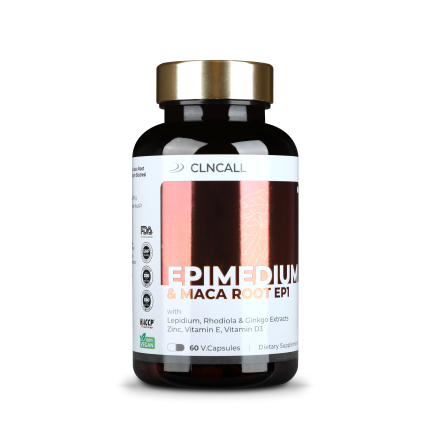
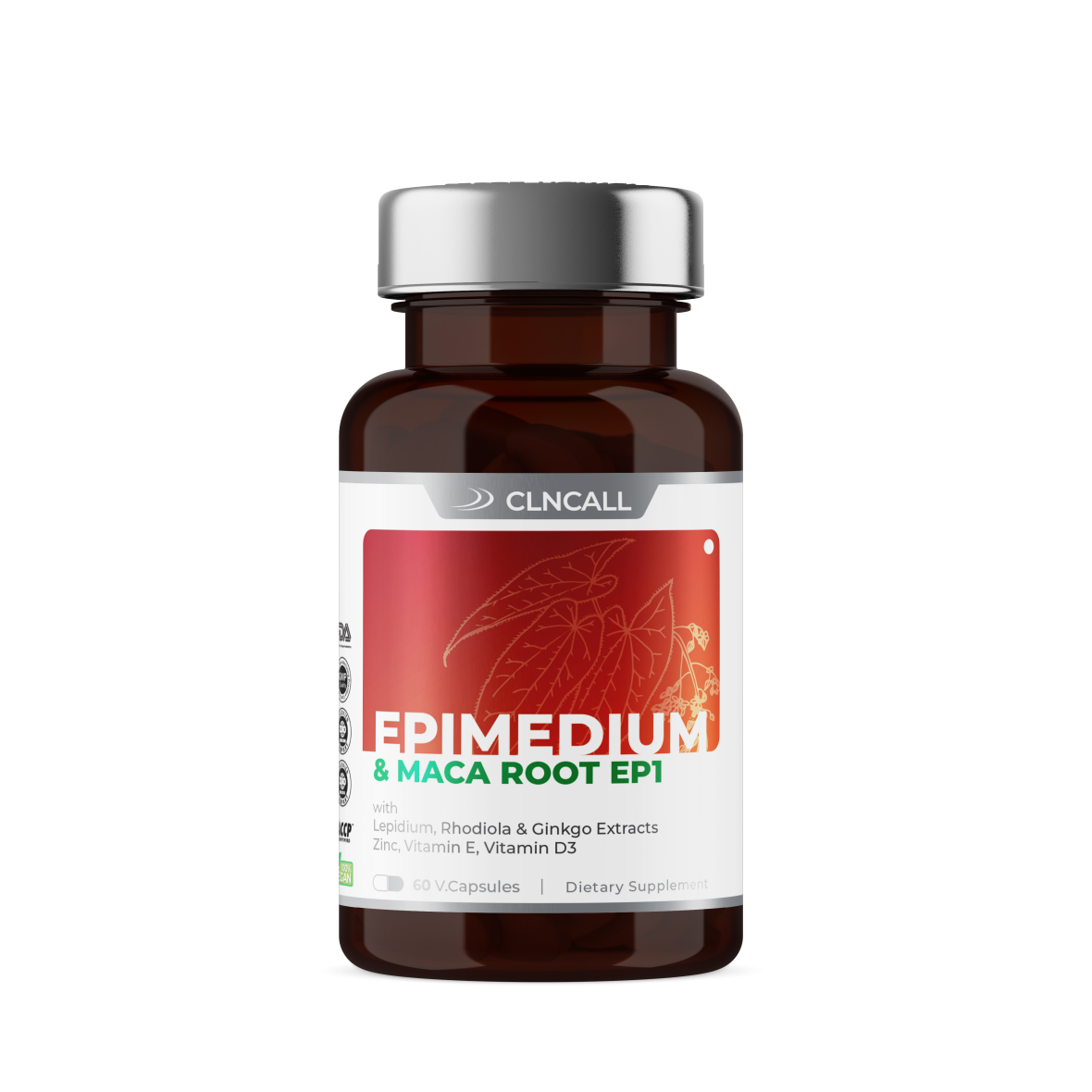
Contents: Epimedium, Lepidium, L-Arginine, N-Asetil Carnitine, Rhodiola, Ginkgo, Astaxanthin, Vitamin E, Zinc, Vitamin D3
| EPIMEDIUM MACA ROOT EP1 60 CAPS | Amount/2Caps | BRD% |
| Epimedium | 500 mg | - |
| Lepidium | 500 mg | - |
| L-Arginine | 50 mg | - |
| N-Asetil Carnitine | 50 mg | - |
| Rhodiola | 50 mg | - |
| Ginkgo | 25 mg | - |
| Astaxanthin | 1,25 mg | - |
| Vitamin E | 100 mg α-TE | 833,3 |
| Zinc | 15 mg | 150 |
| Vitamin D3 | 25 μg | 500 |
Usage Information: It is recommended to consume 2 capsules a day for adults.

Epimedium
More than 260 compounds have been identified in Epimedium species. Among these compounds, prenylated flavonoids are considered the major bioactive constituents and are widely recognized as important chemotaxonomic markers.
Modern pharmacological research has investigated Epimedium and its active constituents in relation to physical performance, hormonal pathways, bone metabolism, immune function, antioxidant mechanisms, aging processes, atherosclerosis and various aspects of tumor biology.
Scientific literature also includes studies evaluating the relationship between Epimedium extracts and sexual function, bone health, osteoporosis models and various physiological processes.
Lepidium
Lepidium species naturally contain polyphenols, alkaloids, proteins, macamides, macaenes, ergosterol derivatives, sterols and various other naturally occurring compounds.
Scientific research has investigated the relationship between Lepidium and reproductive health, antioxidant mechanisms, immune function, cellular protection processes, liver physiology, aging processes and cancer biology.
L-Arginine
L-Arginine is a naturally occurring amino acid that serves as a precursor in nitric oxide synthesis.
Scientific studies have investigated the relationship between L-arginine and circulatory function, vascular physiology, physical performance, exercise capacity and various metabolic processes.
N-Acetyl L-Carnitine
N-Acetyl L-Carnitine is a naturally occurring derivative of L-carnitine and is associated with mitochondrial energy metabolism.
Scientific studies have evaluated the relationship between N-Acetyl L-Carnitine and energy production, cognitive function, learning processes, memory mechanisms, nervous system function and aging-related processes.
Rhodiola
Rhodiola is a botanical ingredient with a long history of traditional use and is frequently associated with adaptation-related physiological processes.
Scientific research has investigated the relationship between Rhodiola, stress response mechanisms, physical endurance, energy metabolism and various physiological functions.
Ginkgo Biloba
Ginkgo biloba is a botanical source naturally containing flavonoids and terpenoids.
Scientific studies have investigated the relationship between Ginkgo biloba constituents and circulatory function, vascular physiology, blood flow, cellular mechanisms and neurological processes.
Astaxanthin
Astaxanthin is a naturally occurring carotenoid pigment found in microalgae, krill, salmon and various marine organisms.
Scientific research has investigated the relationship between astaxanthin and oxidative stress, inflammatory processes, circulatory function, skin physiology, eye health, normal aging processes, atherosclerosis, cancer biology, cataracts and various cellular mechanisms.
The scientific literature also includes studies evaluating the relationship between astaxanthin and biological processes associated with osteoarthritis, rheumatoid arthritis and inflammation-related pathways.
Vitamin E
Vitamin E is a fat-soluble group of compounds consisting of four tocopherols and four tocotrienols.
Scientific studies have investigated the relationship between vitamin E, oxidative stress, cellular protection mechanisms, circulatory physiology and various biological processes.
Zinc
Zinc is an essential mineral involved in numerous biological functions throughout the body.
Scientific research has evaluated the role of zinc in growth and development, protein synthesis, immune system function, reproductive function, neurological processes and tissue formation.
Vitamin D3
Vitamin D3 is an essential vitamin involved in calcium and phosphorus metabolism.
Scientific literature includes studies investigating the relationship between vitamin D status and reproductive health, fertility parameters, pregnancy outcomes, immune function, cardiovascular health, muscle function, bone metabolism and various physiological processes.
Research has also examined associations between vitamin D levels and various disease models, including breast, pancreatic, colon and rectal cancers.
General Information
The information provided in this document has been compiled from scientific publications and literature sources and is intended for general informational purposes only. The statements contained herein are not intended to diagnose, treat, cure or prevent any disease.
Warnings
Do not exceed the recommended daily intake. Food supplements should not be used as a substitute for a varied and balanced diet and a healthy lifestyle. Consult a healthcare professional during pregnancy, breastfeeding, illness or medication use. Keep out of reach of children.
.. Related products ..